A different way to see the Giant Forest
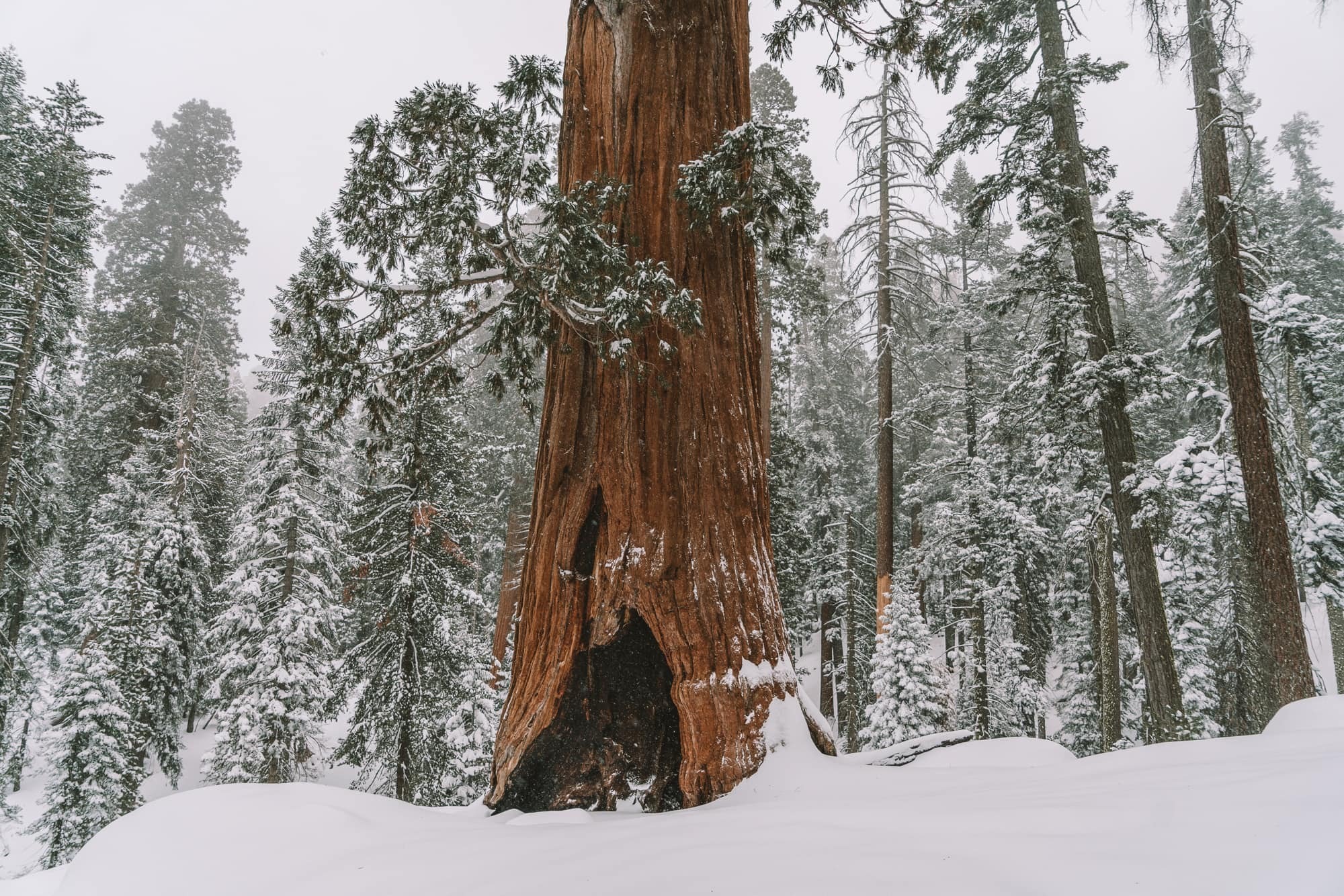 Image: Live Like It’s the Weekend
A layer of snow simplifies the forest without making it empty. Small branches turn into fine dark lines, trunks become stronger vertical forms, and the ground loses many of its usual distractions. The effect is especially striking around the giant sequoias, whose warm bark stands against the cold palette of the surrounding woodland.
The National Park Service’s winter guidance emphasizes the difference between snowy groves and lower foothills, where conditions may be very different. Treat the park as a series of environments rather than assuming that weather at the entrance describes what is happening higher up.
Let the road determine the route
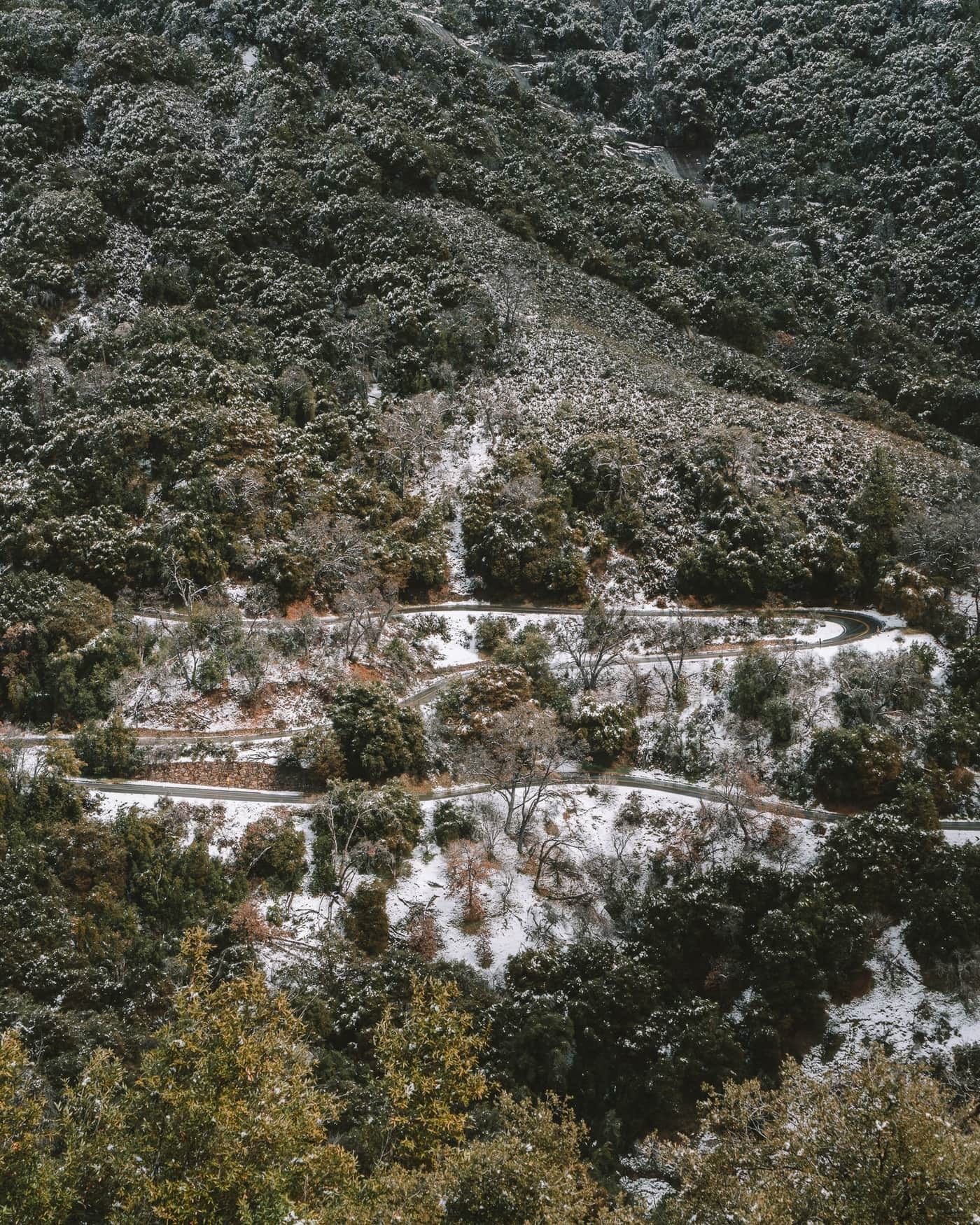 Image: Live Like It’s the Weekend
The climb into the groves is part of the experience, but it is also the first serious planning decision. Mountain roads can be narrow and icy, and closures may prevent a through-drive between Sequoia and Kings Canyon. A road that was open during someone else’s visit is not a guarantee for yours.
Check the official road-conditions page before setting out and again as conditions change. Keep the plan flexible enough to turn back or postpone. A winter photograph is not worth attempting a route that the park has closed.
Prepare for chains before reaching the snow
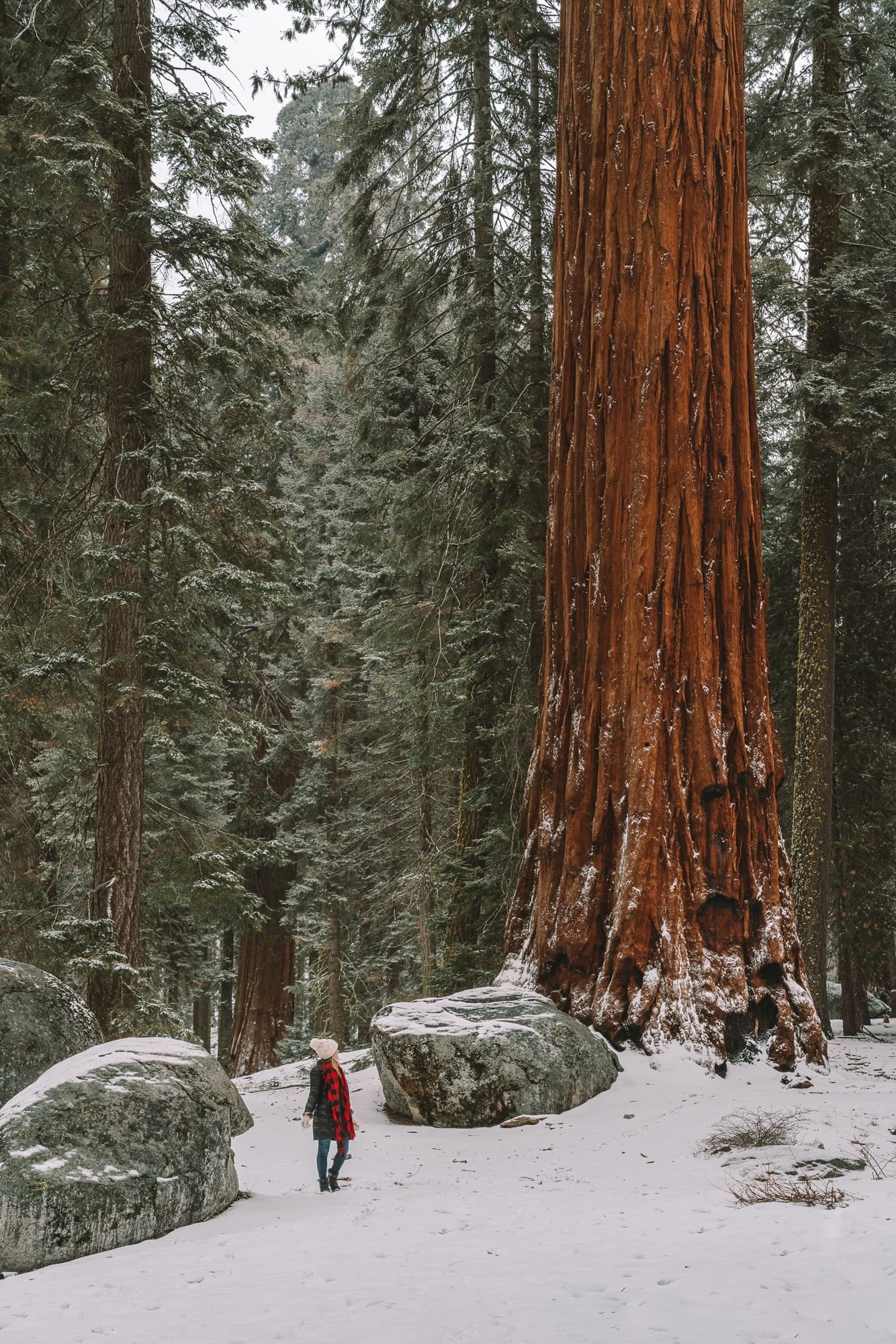 Image: Live Like It’s the Weekend
Four-wheel drive is not a substitute for understanding chain controls. According to the park’s winter-driving rules, all vehicles must carry correctly fitting chains or cables in chain-control zones, including AWD and 4WD vehicles. Whether those devices must also be installed depends on the restriction level and the vehicle’s equipment.
Practice fitting them in advance and check a rental contract’s limitations before choosing a car. If an active storm is forecast, changing the date can be the better decision. Build that possibility into the trip instead of treating it as a failure of the itinerary.
Meet General Sherman without rushing the approach
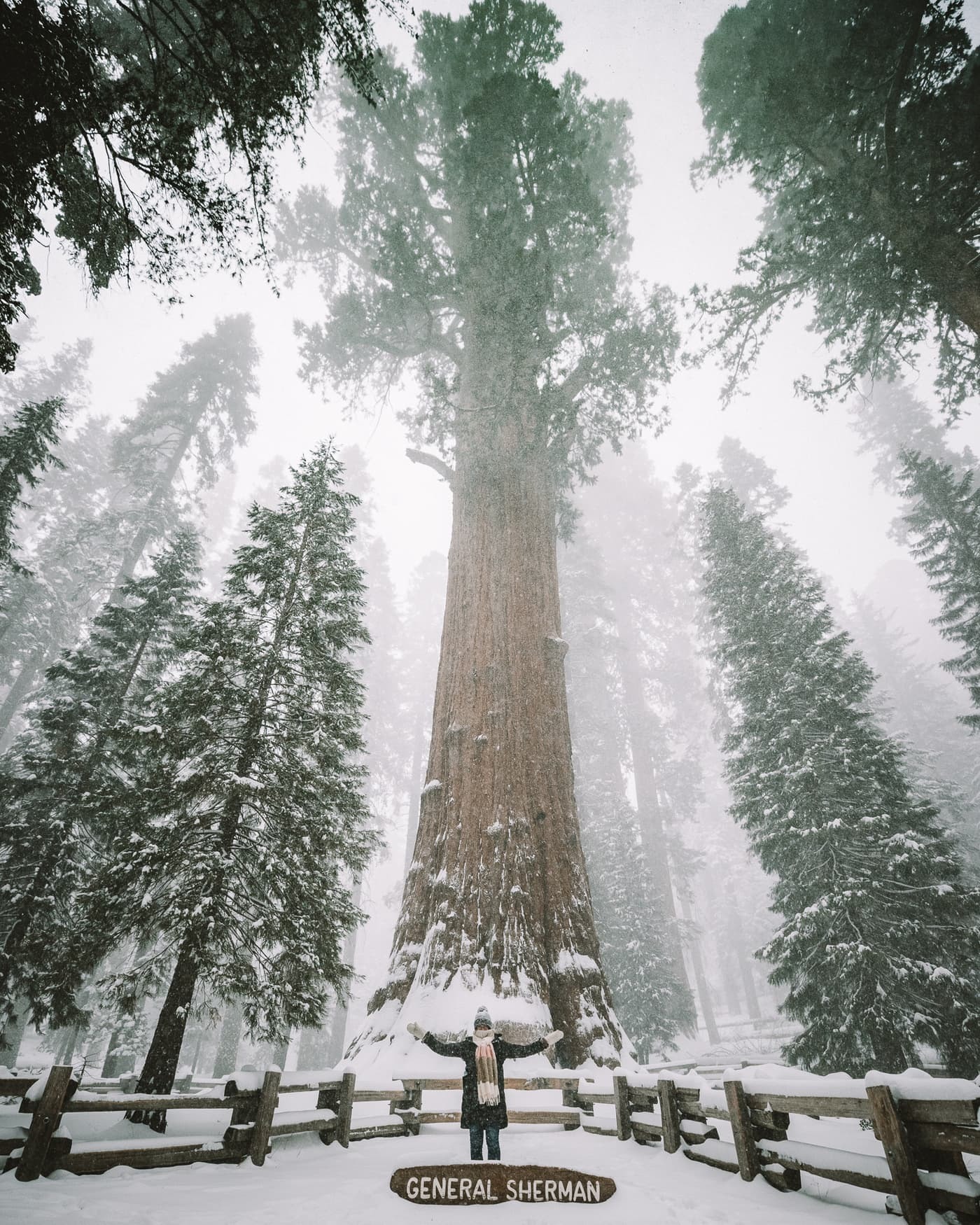 Image: Live Like It’s the Weekend
General Sherman is celebrated as the world’s largest tree by volume, rather than its tallest. That distinction is easy to appreciate near the base, where the trunk expands beyond the scale a photograph can comfortably contain. Winter adds a quieter setting, but it does not remove the need to protect the roots and stay on designated routes.
The National Park Service’s Sherman Tree information explains that winter parking arrangements change when snow accumulates. The approach can be snowy or icy even when a route is maintained. Check the current access arrangement and use footwear traction appropriate to the conditions.
Allow the Congress Trail to become a smaller ambition
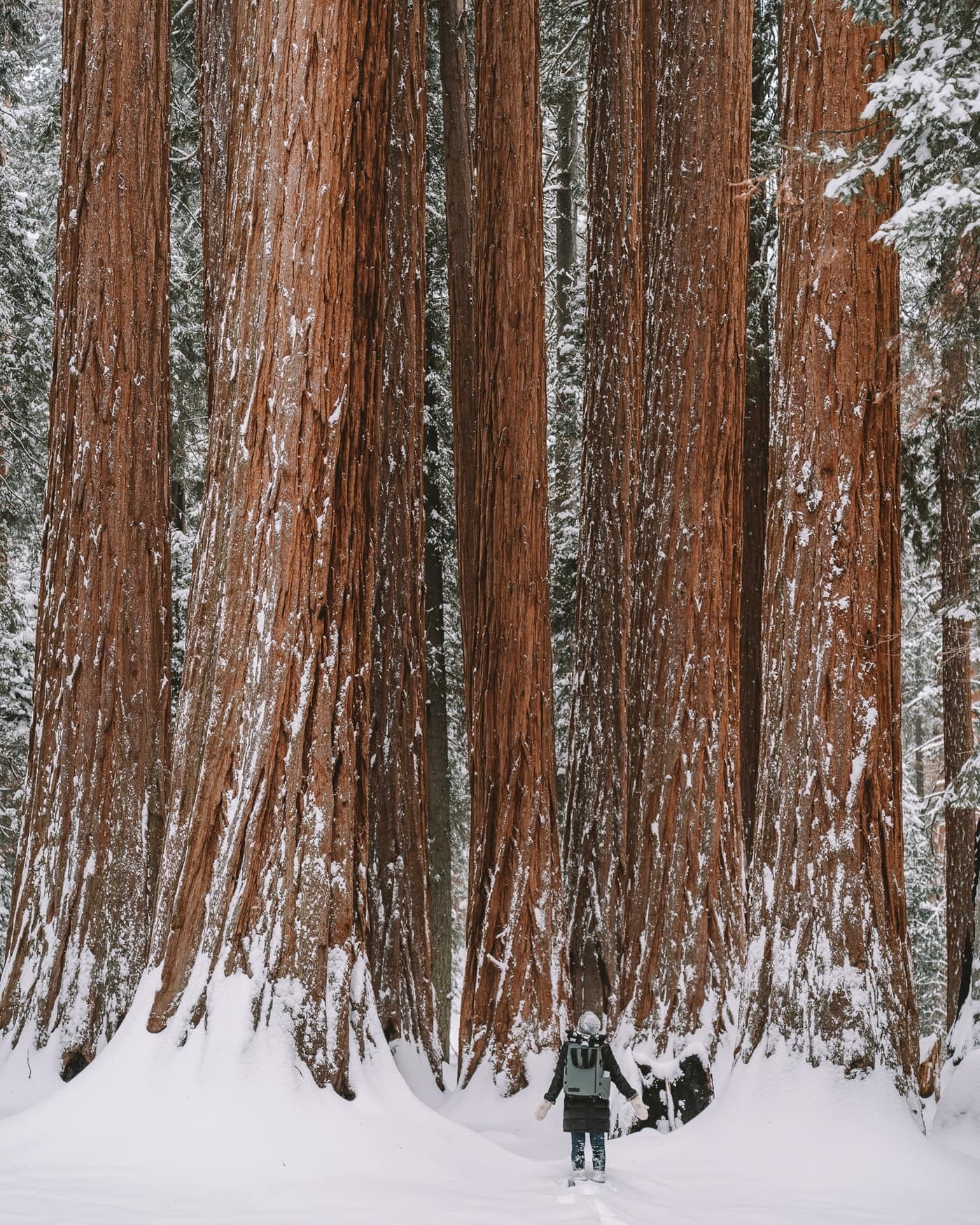 Image: Live Like It’s the Weekend
A group of giant trunks can be more arresting than a single famous tree. Along the Congress Trail area, repeating columns of bark turn the forest into a sequence of changing intervals: one trunk hides another, then a small shift in position opens the space again.
The park’s trail descriptions outline a paved route in snow-free conditions, but that is not a winter accessibility promise. Snow, ice and current work notices can change what is realistic. Ask about the day’s route rather than assuming a summer distance translates into the same effort in winter.
Look for scale in the Parker Group
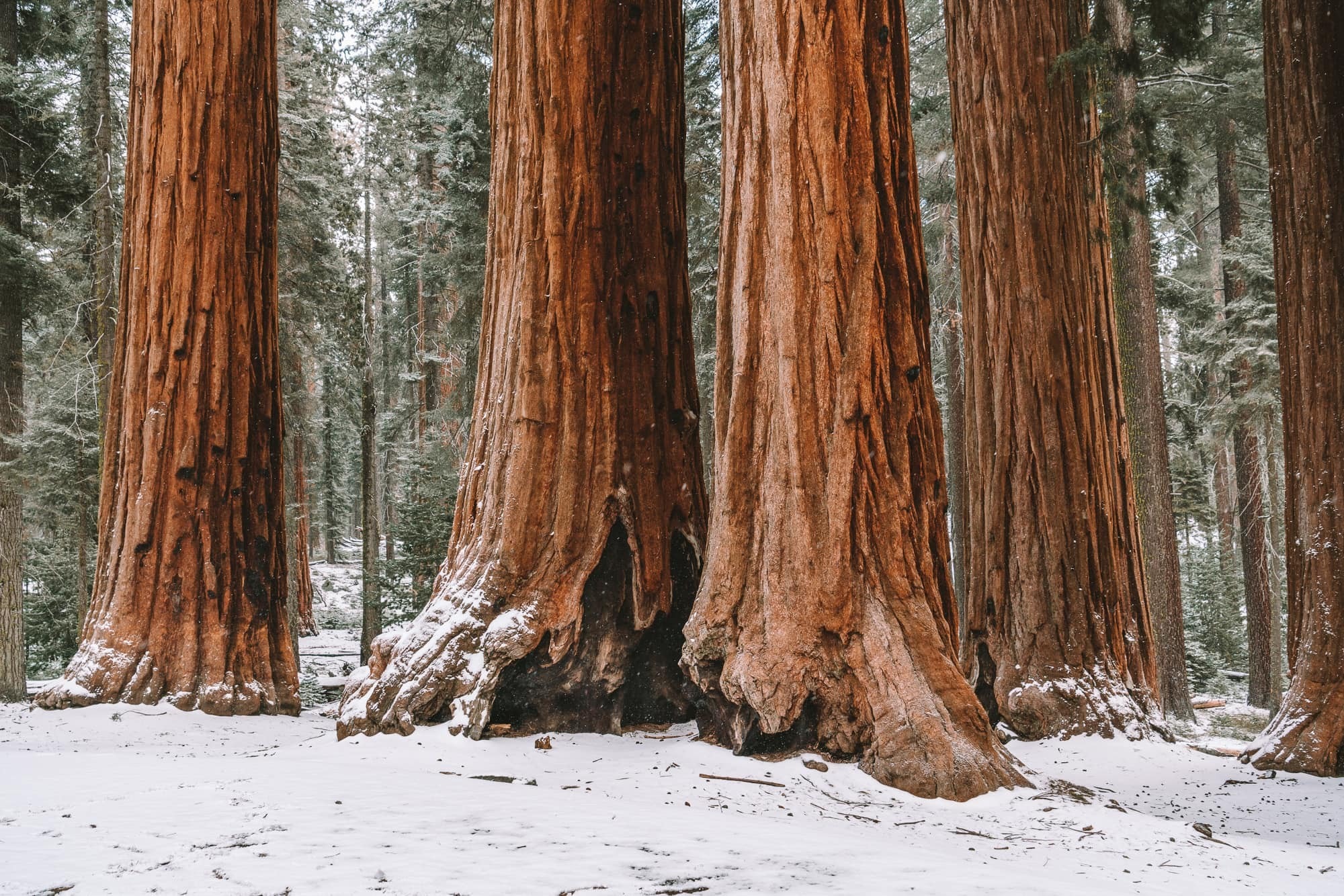 Image: Live Like It’s the Weekend
The Parker Group offers a more collective portrait of the forest. The eye moves between several massive trunks rather than working toward one record-breaking specimen. In the snow, their close spacing produces an especially strong contrast between warm vertical surfaces and the pale open ground.
This photograph also suggests why it is worth slowing down near the trees. A familiar-looking scene changes with each position: bark patterns align, the foreground shifts, and the space between trunks begins to feel as important as their size. Leave the roots and snow-covered ground around protected areas undisturbed.
Understand the Tunnel Log as a winter walk, not a drive-through
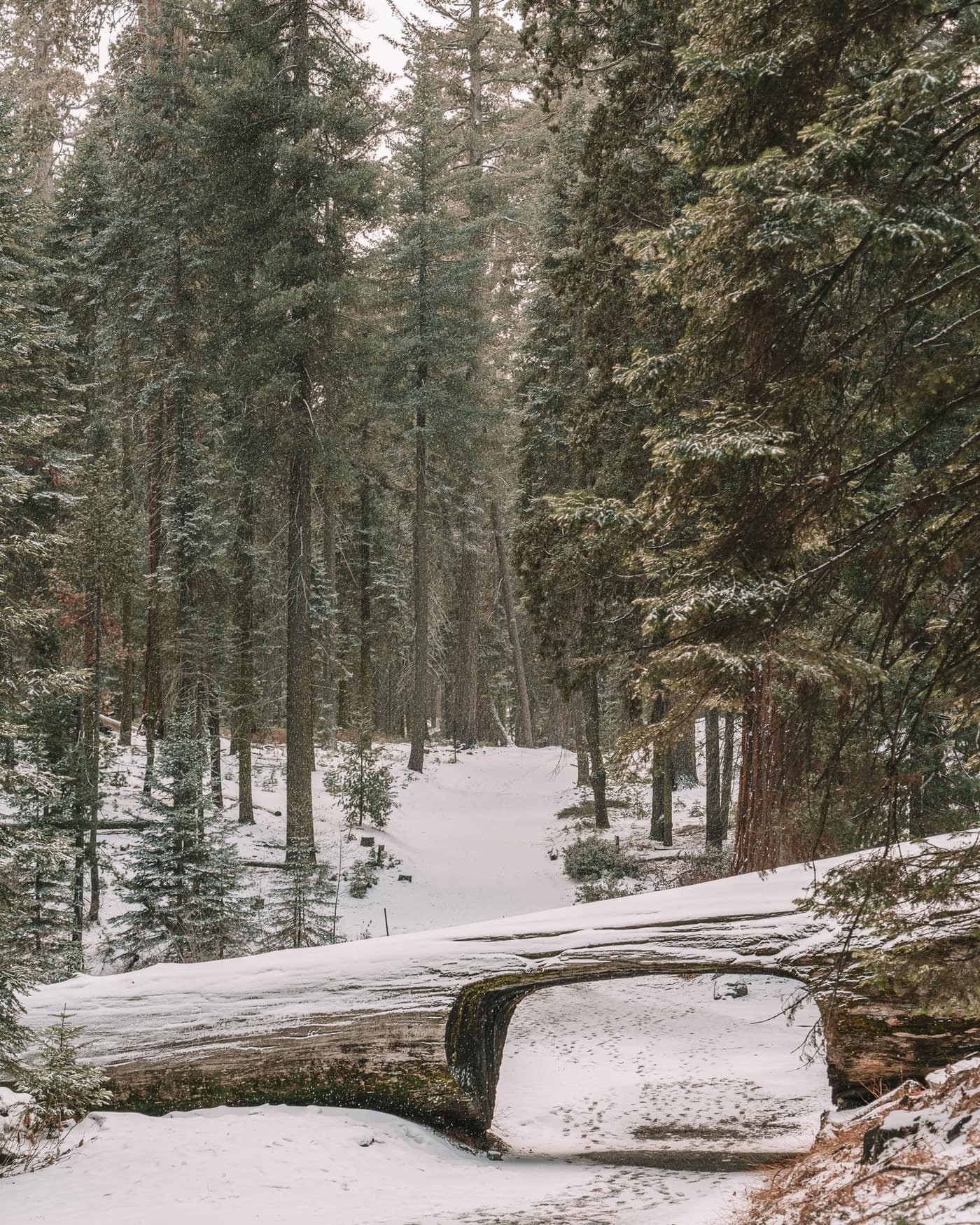 Image: Live Like It’s the Weekend
A fallen trunk turns the idea of a giant tree sideways. At the Tunnel Log, the cut opening makes the scale easier to read while revealing how much of the tree remains around that empty space. It is an engaging subject even without a vehicle underneath it.
In winter, the road toward Moro Rock and Crescent Meadow is not a normal sightseeing drive. The park’s winter viewpoints guidance describes access beyond the museum area in terms of snowshoeing or cross-country skiing when the road is closed. Treat the photograph as a view of the place, not proof that you can drive there on a particular day.
Take the surface of a trail seriously
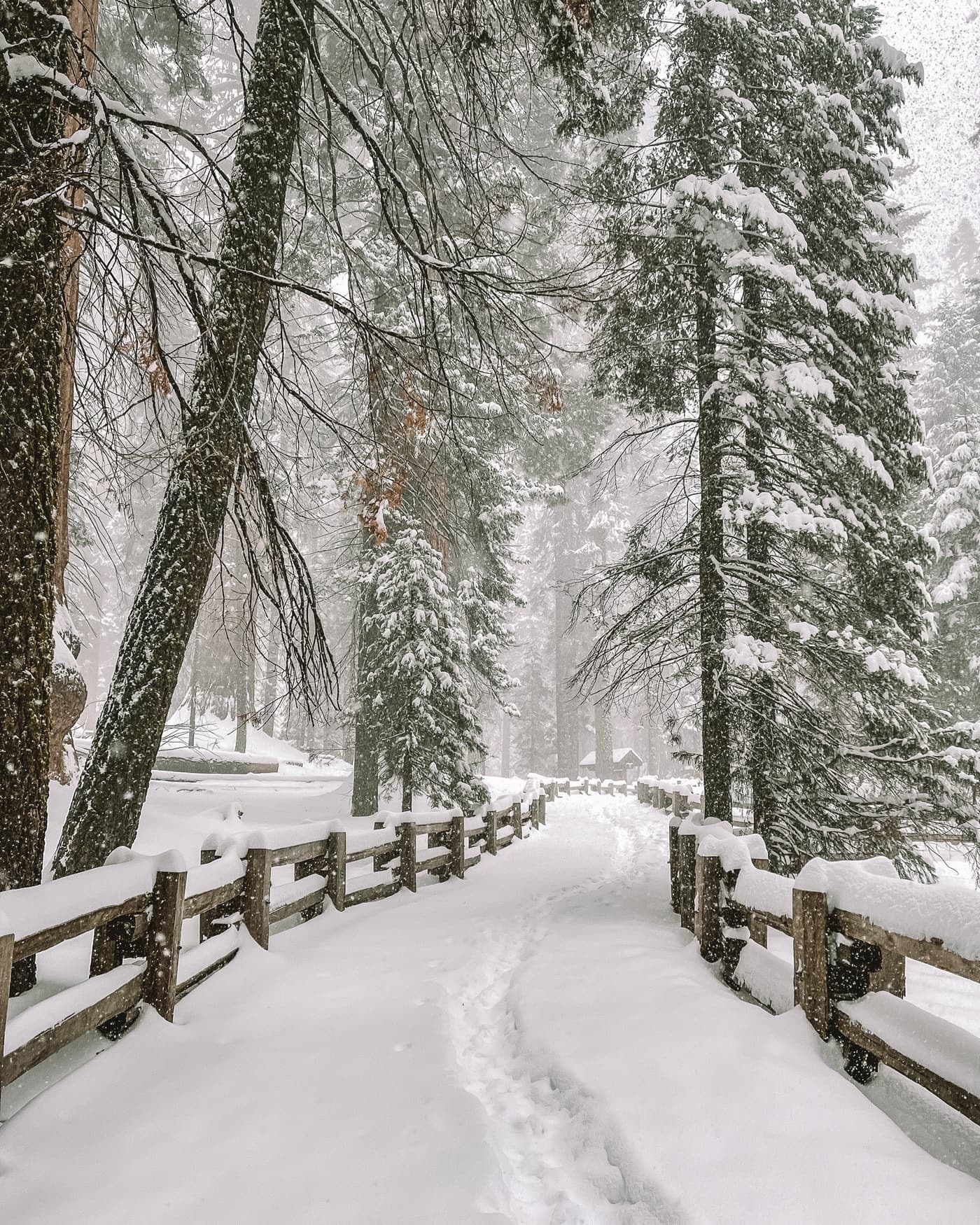 Image: Live Like It’s the Weekend
Fresh snow can conceal where the easy route ends. A softly outlined path may look inviting while hiding ice, uneven footing or a nearby stream. The Giant Forest winter-trails guide recommends preparation matched to conditions, whether that means footwear traction, skis or snowshoes.
Carry navigation, water, warm layers and enough food for delays. Let someone know your plan, turn back before fatigue becomes a problem, and keep boots and snowshoes out of established ski tracks. The goal is not to cover a predetermined distance; it is to return with enough attention left to remember the walk.
Read the forest beyond the snow
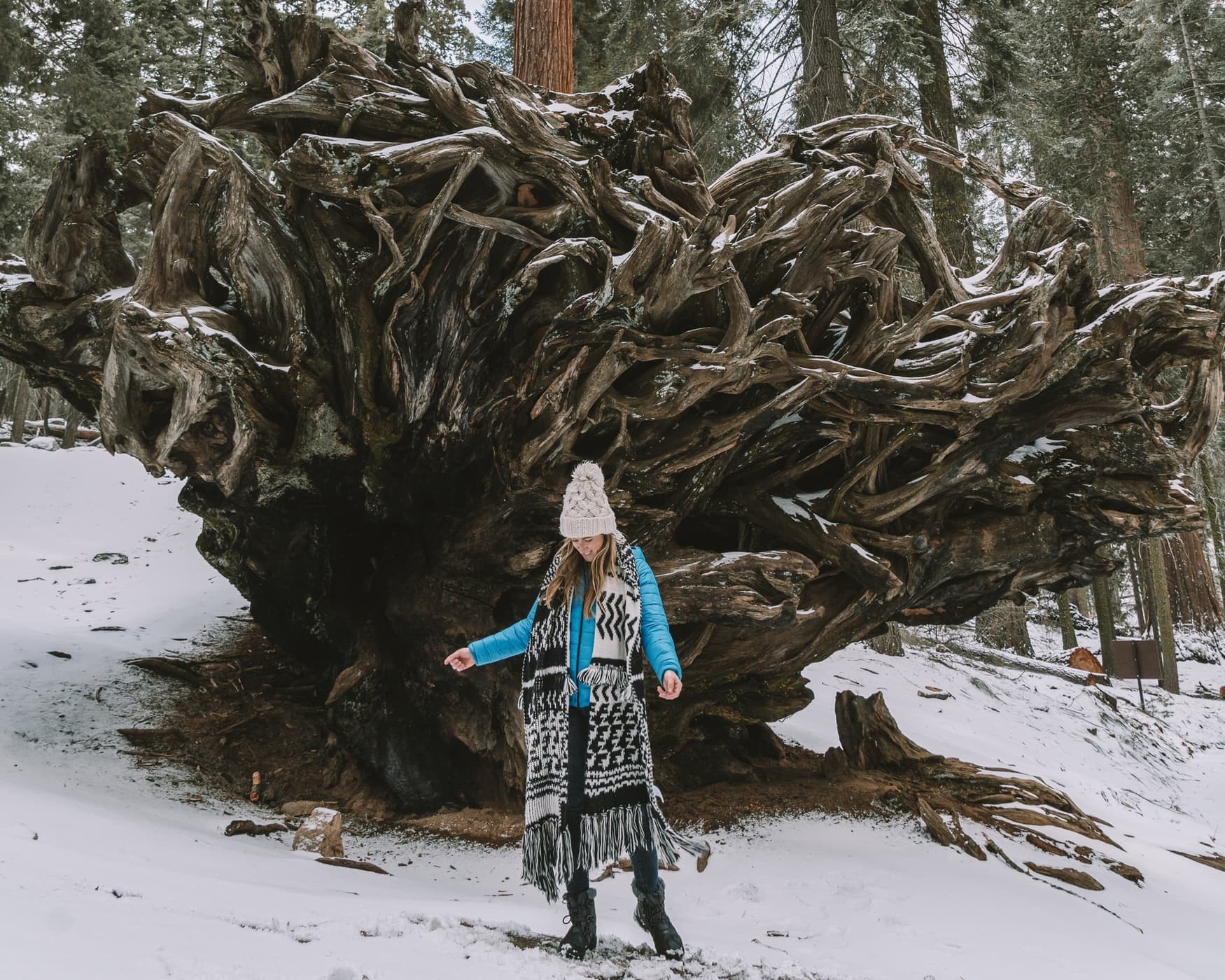 Image: Live Like It’s the Weekend
A fallen tree’s root mass makes a different kind of monument: irregular, exposed and very unlike the upright trunks nearby. These details remind us that the Giant Forest is an ecosystem, not a collection of permanent objects.
Fire belongs to that story too. NPS research and interpretation explains how periodic fire can create conditions for young sequoias, while increasingly severe fires threaten mature trees. Winter’s stillness should not be mistaken for immunity from change. Looking at the forest carefully means noticing regeneration, damage and decay alongside the celebrated giants.
Keep the final plan deliberately flexible
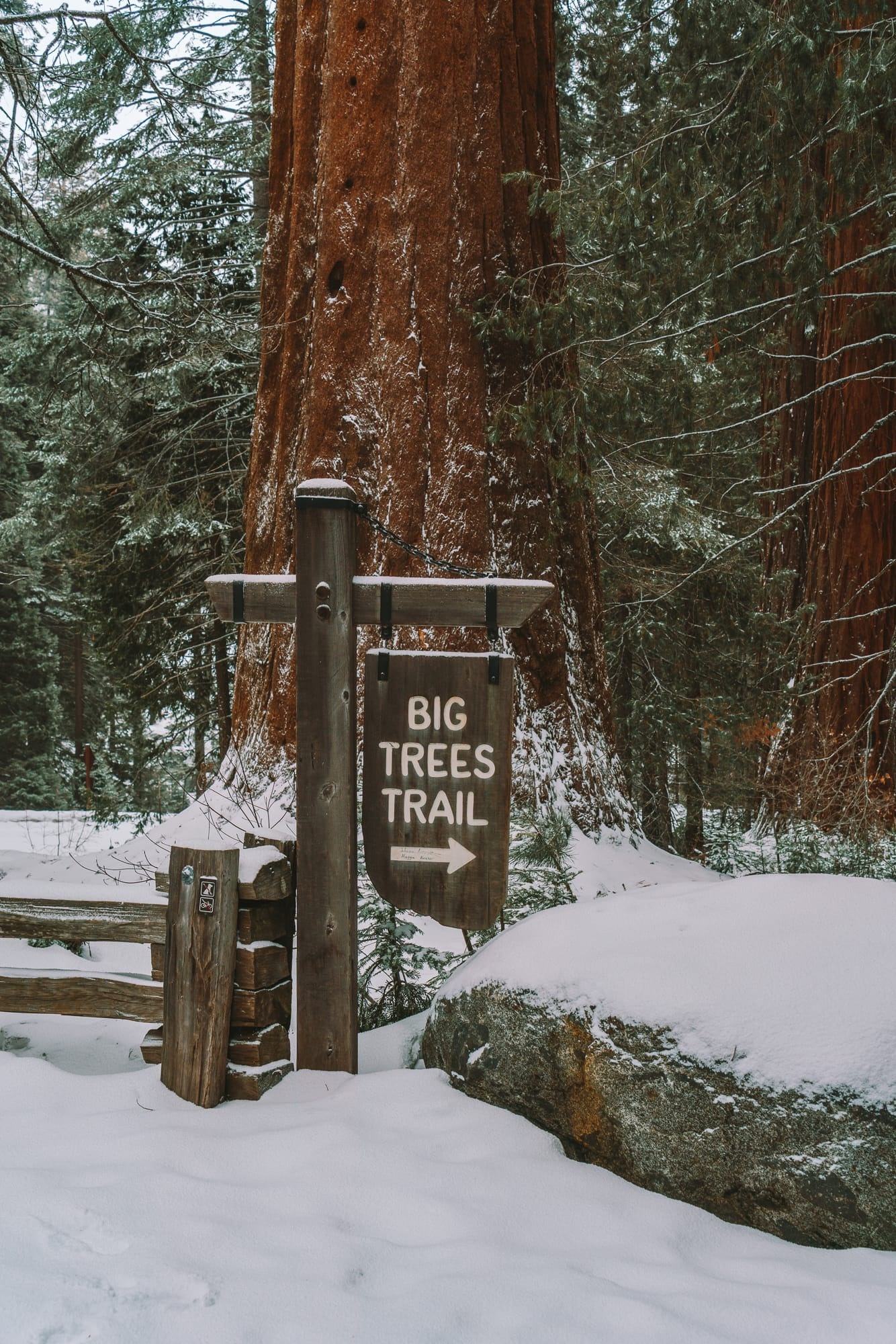 Image: Live Like It’s the Weekend
The most useful winter itinerary has room to become shorter. One comfortable walk and a long look at the trees may make a better day than a sequence of sites reached with worsening weather and fading light. Posted conditions and ranger advice deserve more weight than an attractive route saved months earlier.
Before leaving, review park safety guidance and the current forecast. Falling branches, cold, icy ground and changing conditions remain real hazards in beautiful surroundings. These photographs show what a winter visit can look like; they do not establish what is open or safe on the day you go.